Insights
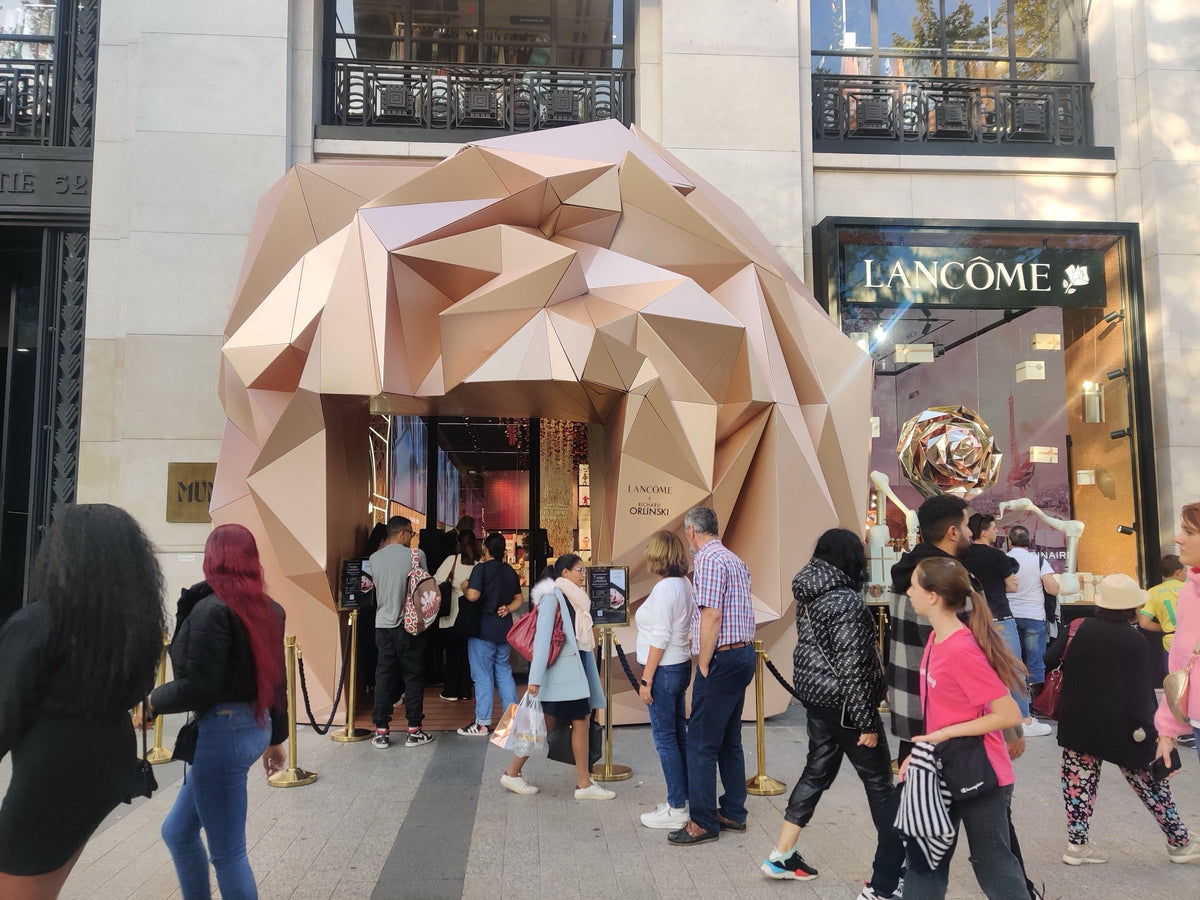
Flagships and facades: what actually gets people through the door?
On the big luxury avenues, the window is no longer a few feet of glass. The whole building is the display. Six...
A display concept is only worth something if it can be built, at the right cost, for every store. The questions to ask a luxury retail display manufacturer before trusting it with a custom display.
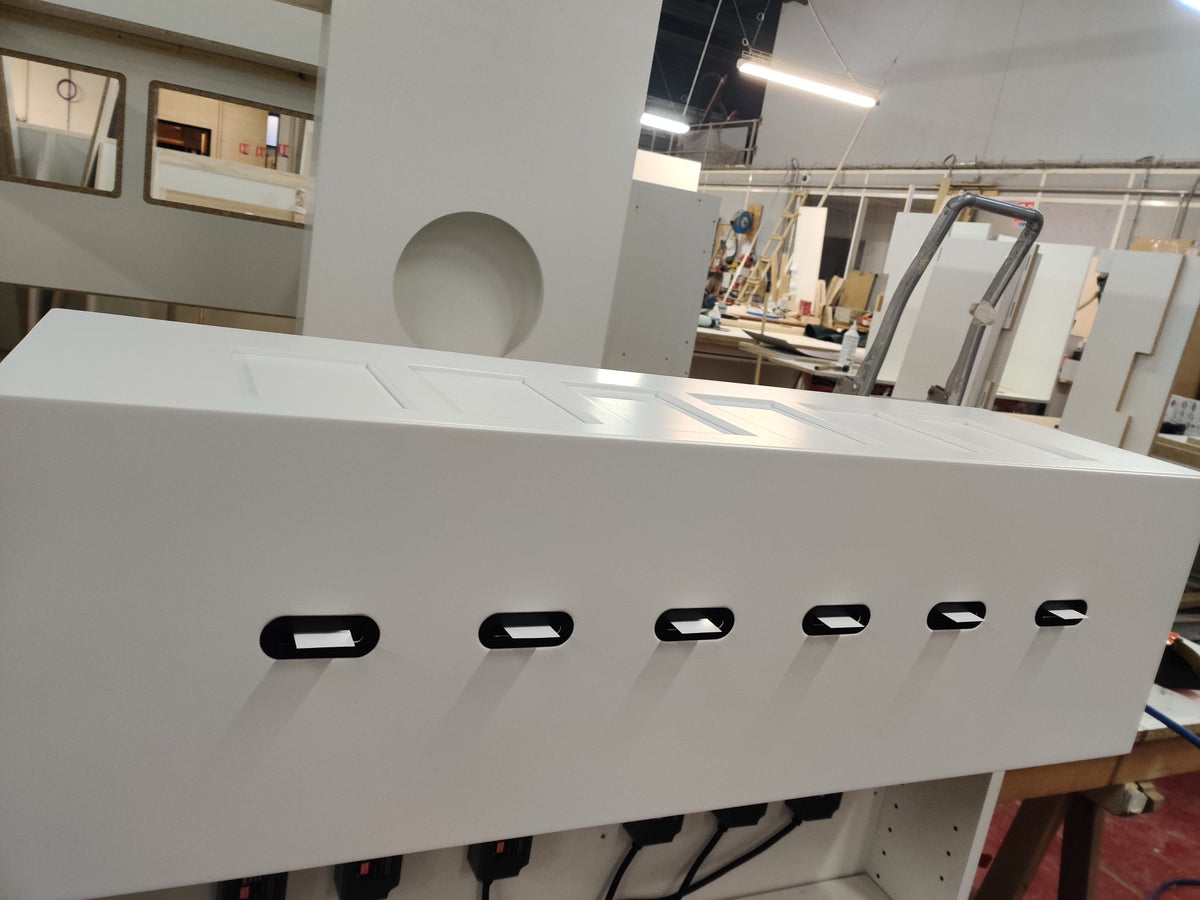
Choosing a luxury retail display manufacturer means choosing who will turn a concept into pieces standing in dozens, sometimes hundreds, of stores. Beauty and luxury brands usually hand the idea to a design or retail agency, then look for a manufacturer to produce it. Between the drawing and the workshop, engineering is often missing, and some projects have to start over, as we explain in From idea to store.
A custom POS display manufacturer should be able to tell you early on what can be built, with which materials, which electronics and at what production cost. Ask who leads that work, and whether it happens before or after production starts. At Gaudier, it starts in the ideation workshop: a session with our design engineers, in Paris, in New York or remotely, where the brief is read, questioned and reframed. Each direction is sketched by hand and comes with a feasibility note that estimates manufacturing, cost and lead time.
When a brand comes in with a concept that's already designed, we go back to its intent when needed and get to a piece that can be built without runaway development costs. The result: 95% of what we propose gets made.
A prototype and a production run for a whole store network play by different rules. The price that matters is the unit cost at rollout quantity, shipping and installation included. Ask about finishes, too: our tester displays, for example, come in 3D-printed PLA or in PMMA. In luxury, the finish is part of the message. Our New York workshop has a paint booth, so we can deliver the European-grade quality our clients look for in the Americas.
A 3D rendering can win people over, but it says nothing about how a mechanism holds up, how easy the refills are to reach, or how a shopper in a hurry will use the piece. Insist on a working prototype, tested in conditions close to the store, before any production run. That's when you fix the flaws that would cost a lot once the parts are delivered. Our process runs from 3D rendering to working prototype, and 98% of our prototypes then roll out with no modifications.
A manufacturer may build in house, subcontract, or both. Where a piece is made affects shipping, lead times and how easy it is to restock, so ask where each part will be made. In New York, everything is built in our workshop in Long Island City, plastic parts included. It's a full millwork shop that turns out furniture, backwalls, podiums and displays. In France, we have significant 3D printing capacity and work with partners for the rest. For rollouts in Europe, the Middle East or Asia, we build as close to the stores as we can, through a network built over the years.
Luxury displays travel. They have to arrive intact, be installed by teams who didn't design them, and work every day. Ask about the manufacturer's past rollouts: volumes, countries, store surveys, documents given to installers, replacement parts. Our team has designed 1,600 stores and managed deployments across more than 40,000 stores, and our devices are in service in more than 30 countries. A discovery pedestal, for example, ships with its installation guide, artwork templates and 3D drawings.
When the people who design the piece also build it, feasibility is no longer a surprise at the end. One team, one point of contact, no suppliers to coordinate: decisions get made faster. Our own devices, Paperscent, Dropper and Scented Fan, are built into the fixtures right in the workshop. That know-how goes back a long way. The company has made point-of-sale displays since 1990, and has worked in beauty ever since a cardboard end-of-aisle display designed for Garnier in 1998 (see our story).
This model doesn't replace agencies: we work with them. An agency can bring us its concept. We make it manufacturable, then build it and roll it out, and the agency keeps its creative role.
No, but you can have one. A brand can come with just its brief or with its agency's concept. Either way, the ideation workshop starts by reframing it to check what can be built.
Yes. Our integrator kits, like the Dropper integrator kit, are made for integrators, display manufacturers and agencies that design their own fixtures. Integration guides and 3D drawings are in Downloads.
Insights
On the big luxury avenues, the window is no longer a few feet of glass. The whole building is the display. Six...
Insights
Every year, stores around the world go big for the holidays. From New York to the Champs-Élysées, here's what the Christmas window...
Guides
An animated window display catches the eye. To bring people inside, the motion also has to lead to the product: let them...
Gaudier designs, deploys and operates interactive in-store devices that let shoppers test beauty and luxury products. Buy or rent, in 30+ countries.