Insights
Flagships and facades: what actually gets people through the door?
On the big luxury avenues, the window is no longer a few feet of glass. The whole building is the display. Six...
A great in-store experience takes an idea, engineering and manufacturing. When those three trades sit in different companies, the concept often stays on paper. Here is how we connect them, with agencies and for brands.
A beauty brand is getting ready for a launch. It wants shoppers to discover the product in store: a pedestal that lets them test the fragrance, a window that moves, a display they want to touch. One question comes up fast: who can take this in-store experience from the first idea to a finished piece standing in the store?
Most of the time, the brand starts with a design or retail agency. The agency develops the concept, with beautiful renderings and often strong ideas. Then the brand goes looking for a POS display manufacturer, a furniture maker or a fab lab to build it.
A step often goes missing in between. Nobody has checked how the piece will actually be made: which materials, which electronics, at what production cost, how it will ship, and how a store team will install and maintain it. The concept lands at the manufacturer, who finds it can't be built as drawn, or only with a development budget the project can't cover. Back to square one.
In store, the budget for a merchandising tool usually sits between EUR 50 and EUR 1,500 at most. That number changes everything. The idea has to be designed from day one to be produced in volume, ship without breaking, install in minutes and get used every day by shoppers who will never read instructions.
A concept that needs months of engineering, one-off parts or daily maintenance won't survive those constraints, however appealing it looks.
We don't start with the object. We start with how it will be used. In our ideation workshop, brand, retail, visual merchandising and marketing sit together in one structured session. We build the brief with you around a few simple questions:
Creative directions, feasibility and budget are all covered in that same session. From day one, you know the idea can be made.
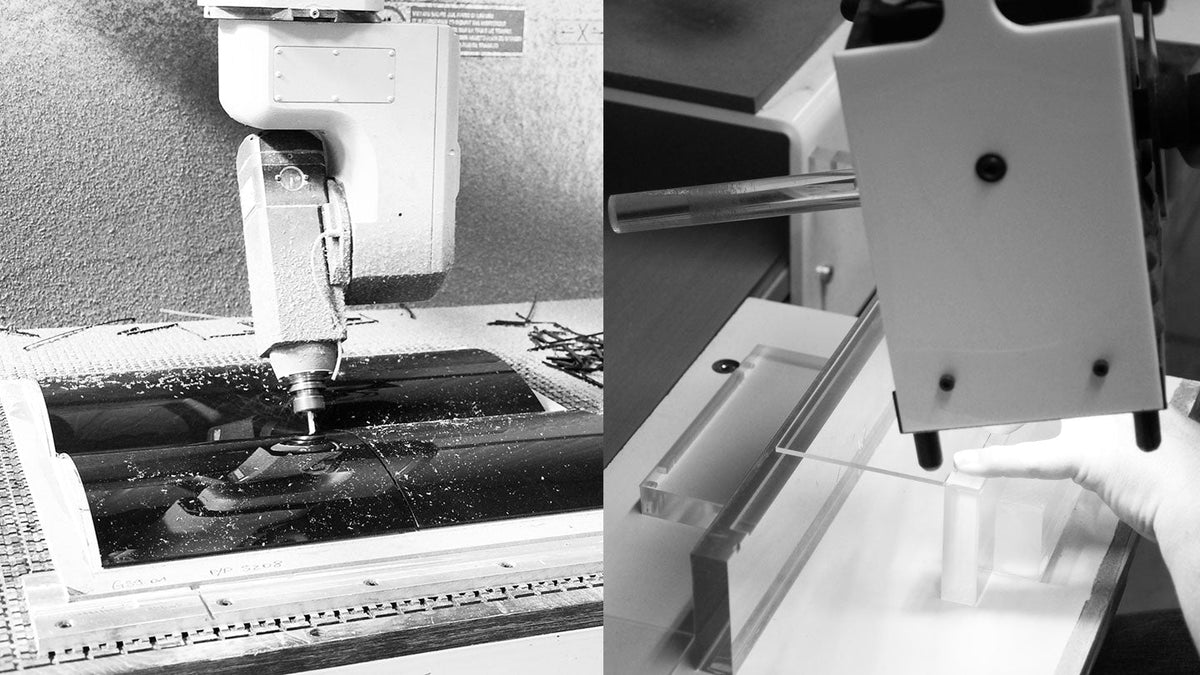
We practice design engineering: we design the experience, and we know how to build it. From the 3D rendering to the working prototype, then manufacturing and delivery, one team follows the project, with one point of contact. The people who design your piece are the people who build it.
That dual skill set comes from the field. Julia is a store designer and visual merchandiser who has had many store fixtures built. Alex, who runs Gaudier in the United States, has led rollouts for very large brands, in very large quantities. Together, we have installed devices all over the world. We know POS displays as well as store furniture, the details luxury brands expect, and what holds up to everyday store life.
The results show it: 95% of what we propose gets made, and 98% of our prototypes roll out with no modifications.
Many projects start with an agency concept, and that's how it should be. We work with agencies: we take the original intent and ideas and make them manufacturable. Sometimes that takes a few adjustments. Sometimes it means starting over from a blank page while keeping the spirit of the concept, so it works in the real world without runaway development costs. The agency keeps its creative role, and the brand gets a piece that works.
We don't build everything in one place, and that's by design. In New York, everything is made in our own workshop, plastic parts included. In France, we have significant 3D printing capacity and work with partners for the rest. Everywhere else, in Europe, the Middle East or Asia, we build as close as possible to where the project rolls out. Over the years we have built a network that gives us access to rare craftsmanship.
Our devices are now in more than 30 countries. Producing locally cuts shipping and makes every rollout simpler.
| Step | What we do |
|---|---|
| 1. Ideation workshop | The brief, creative directions, feasibility and budget, with your whole team |
| 2. Design and prototype | From the 3D rendering to a working prototype, tested before any production run |
| 3. Manufacturing | In our workshop or with our partners, as close as possible to where it rolls out |
| 4. Delivery | The finished piece, delivered anywhere in the world |
See examples in our work, or read how we bring scent into the store in our article on scent marketing.
Yes. We take the agency's concept and make it manufacturable while keeping its intent. The agency stays the creative lead, and we handle engineering, prototyping and manufacturing.
Yes. We first check what can be done within your budget. If needed, we go back to the original ideas to get to a piece that works in the store.
In New York, in our own workshop. In France, with our 3D printing and our partners. Elsewhere, as close as possible to where the project rolls out. Tell us about your project.
Insights
On the big luxury avenues, the window is no longer a few feet of glass. The whole building is the display. Six...
Insights
Every year, stores around the world go big for the holidays. From New York to the Champs-Élysées, here's what the Christmas window...
Guides
An animated window display catches the eye. To bring people inside, the motion also has to lead to the product: let them...
Gaudier designs, deploys and operates interactive in-store devices that let shoppers test beauty and luxury products. Buy or rent, in 30+ countries.