Insights
Flagships and facades: what actually gets people through the door?
On the big luxury avenues, the window is no longer a few feet of glass. The whole building is the display. Six...
An hour in a store, or several days inside a brand's world? From hotels to cafés, the luxury brand experience now reaches far past the sales floor. What these places can teach every brand.
A suite? A facial? A coffee? Luxury houses no longer just welcome clients into their stores. They host them at the hotel, at the spa, at the table. The reason comes down to time. A store visit rarely lasts more than an hour. A stay at a branded hotel lasts several days, and every detail, from check-in to breakfast, tells the house's story. It's the luxury brand experience taken all the way: you stop looking at the brand's world and start living in it.
Bvlgari has taken the idea furthest. Its first hotel opened in Milan in 2004, and by May 2024 the collection counted nine, from London and Paris to Dubai, Bali, Tokyo and Rome, its most recent opening (Il Sole 24 Ore). Experiential luxury is hard to stage around a piece of jewelry. A hotel gives it room. A trained eye finds the same obsession with detail in the materials and finishes as in the high jewelry.
Other houses play it differently. At Palazzo Versace on Dubai Creek, the furniture and fabrics in the rooms were designed and made by Versace for the hotel (Palazzo Versace Dubai). Guests come for the spectacle, while Bvlgari guests expect a quieter kind of elegance. Armani put its Dubai hotel inside the Burj Khalifa and opened a second one in Milan's fashion district (Armani Hotels). Three houses, three ways to express who they are, and three sets of guests who expect different things.
For a skincare brand, a palace hotel spa shows what a store can't: a full treatment protocol, visible results, signature application techniques. In September 2021, Dior opened Dior Spa Cheval Blanc Paris in LVMH's hotel on the Seine (FashionNetwork). On April 14, 2023, it opened Dior Spa Eden-Roc at the Hôtel du Cap-Eden-Roc in Antibes (LVMH). Both sides win. The brand builds an emotional bond no counter can match, and the hotel stands out in a crowded market.
A café is the easiest way in. Pop-up cafés create urgency and exclusivity: people go because they won't last. In March 2022, Acqua di Parma opened one inside the Caruso restaurant at Milan's Grand Hotel et de Milan to launch its new Colonia C.L.U.B., with cocktails inspired by its fragrances, a perfumery masterclass and a scent discovery lab for kids, through March 23 (Journal du Luxe, in French). Permanent ones, like Tiffany & Co.'s café or Ralph Lauren's Ralph's Coffee, are about putting down roots: a place people come back to, an everyday extension of the store. The choice is never random. One creates big moments, the other a habit.
In March 2022, Dior took the idea to its limit when it reopened its historic address at 30 avenue Montaigne. Around the store, La Galerie Dior tells the house's history across 13 rooms, alongside a restaurant inspired by Christian Dior's own recipes, a pastry shop, two gardens and even a private apartment, La Suite Dior (designboom, Cultured). The flagship becomes a destination, where you can also pay from your phone at any point.
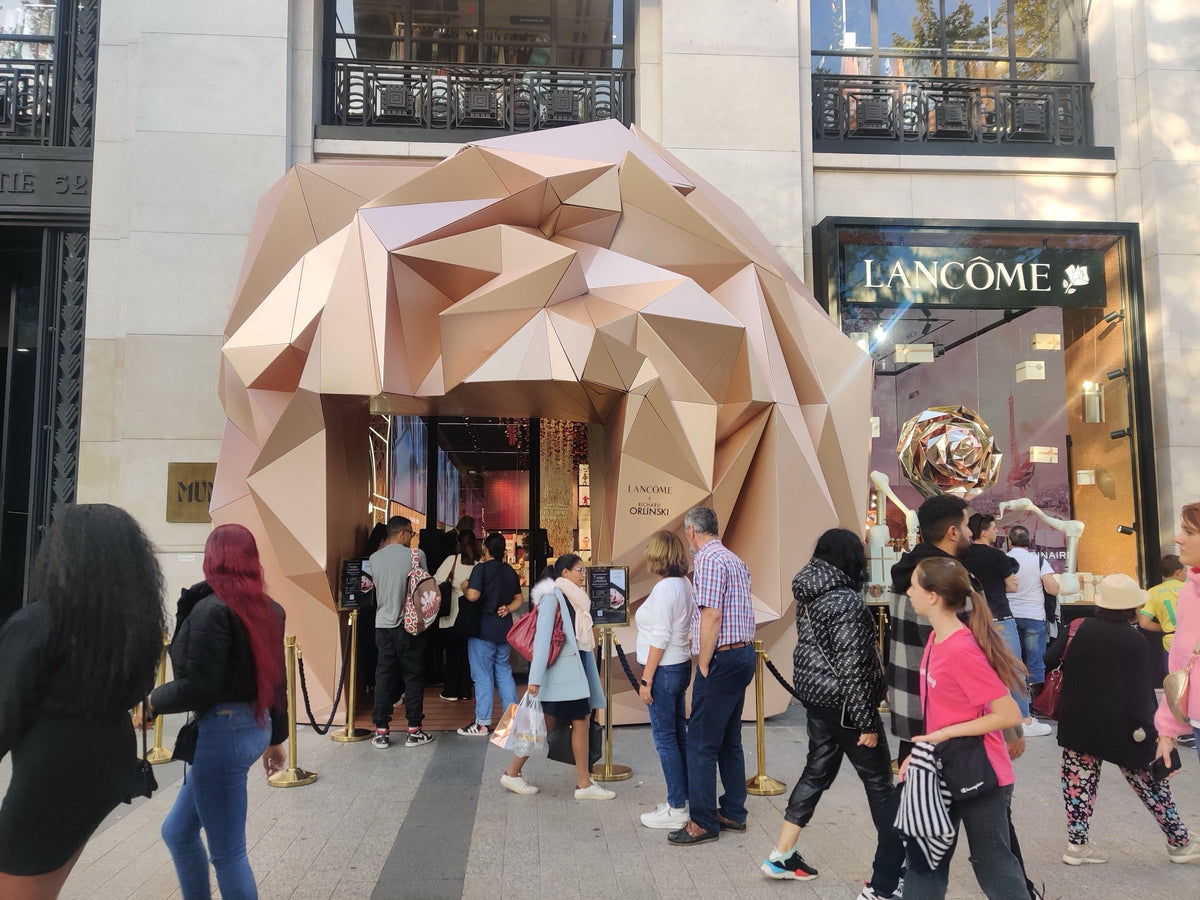
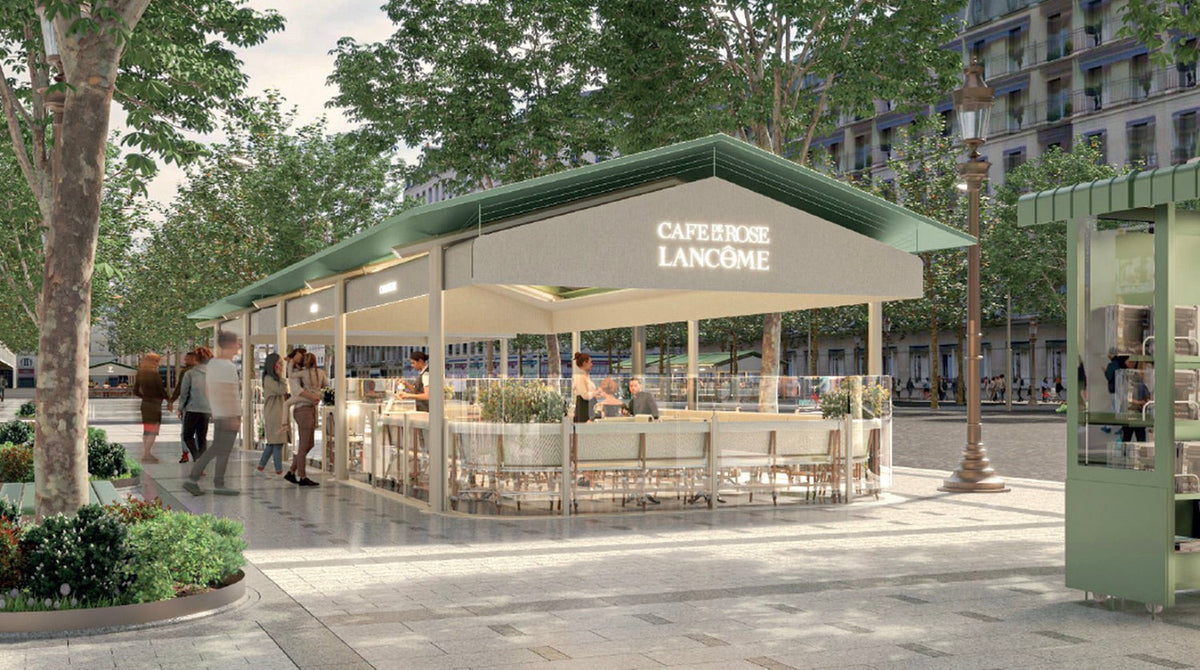
In June 2024, Lancôme opened Café de la Rose at the entrance of its flagship at 52 avenue des Champs-Élysées, pink from floor to ceiling, as a tribute to the brand's estate in Grasse (Journal du Luxe). We built the rotating flowers in the decor with a Paris paper flower studio: hidden mechanisms that bring the house's emblem, the rose, to life in front of guests. In 2025 the concept traveled to Hamad International Airport in Doha, where we designed and built the scent display that sits on every table of the café (see the project).
You don't need a hotel to use the lesson. These places work because every touchpoint carries the brand's codes, and because they give people a reason to stay: to taste, to try, to be pampered. A counter, a window or a pop-up that runs a few weeks can follow the same logic at its own scale. Think of an object that moves and catches the eye, as in an animated window display, a testing gesture that leads to the product, or an activation that brings people back. That's the core of our Retailtainment projects, designed and built for each brand.
Insights
On the big luxury avenues, the window is no longer a few feet of glass. The whole building is the display. Six...
Insights
Every year, stores around the world go big for the holidays. From New York to the Champs-Élysées, here's what the Christmas window...
Guides
An animated window display catches the eye. To bring people inside, the motion also has to lead to the product: let them...
Gaudier designs, deploys and operates interactive in-store devices that let shoppers test beauty and luxury products. Buy or rent, in 30+ countries.